The content in this article should not be taken as medical advice. Please consult with your healthcare provider regarding your individual health needs.
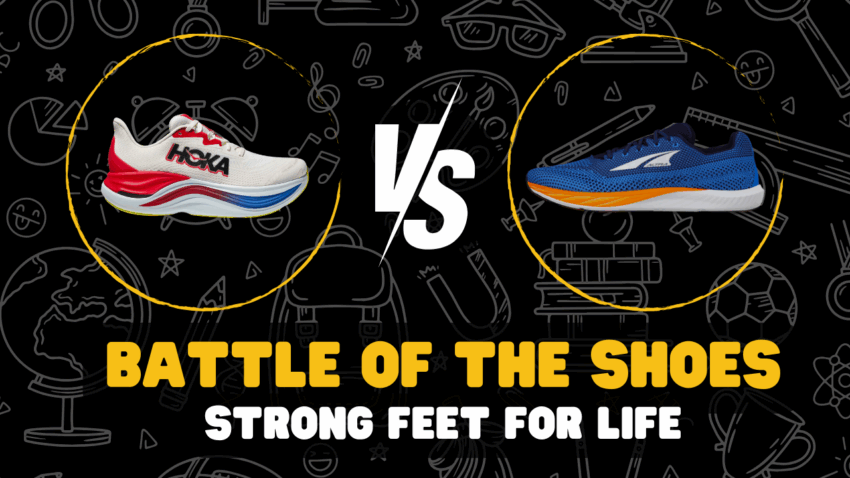
In a world obsessed with high-tech “super shoes” packed with carbon plates and thick foam, it’s worth asking: Are we running away from what our feet were meant to do?
If you’re someone who cares about long-term health, natural movement, or simply feeling more grounded—this post is for you.
TL;DR
Minimal shoes build foot strength and natural movement
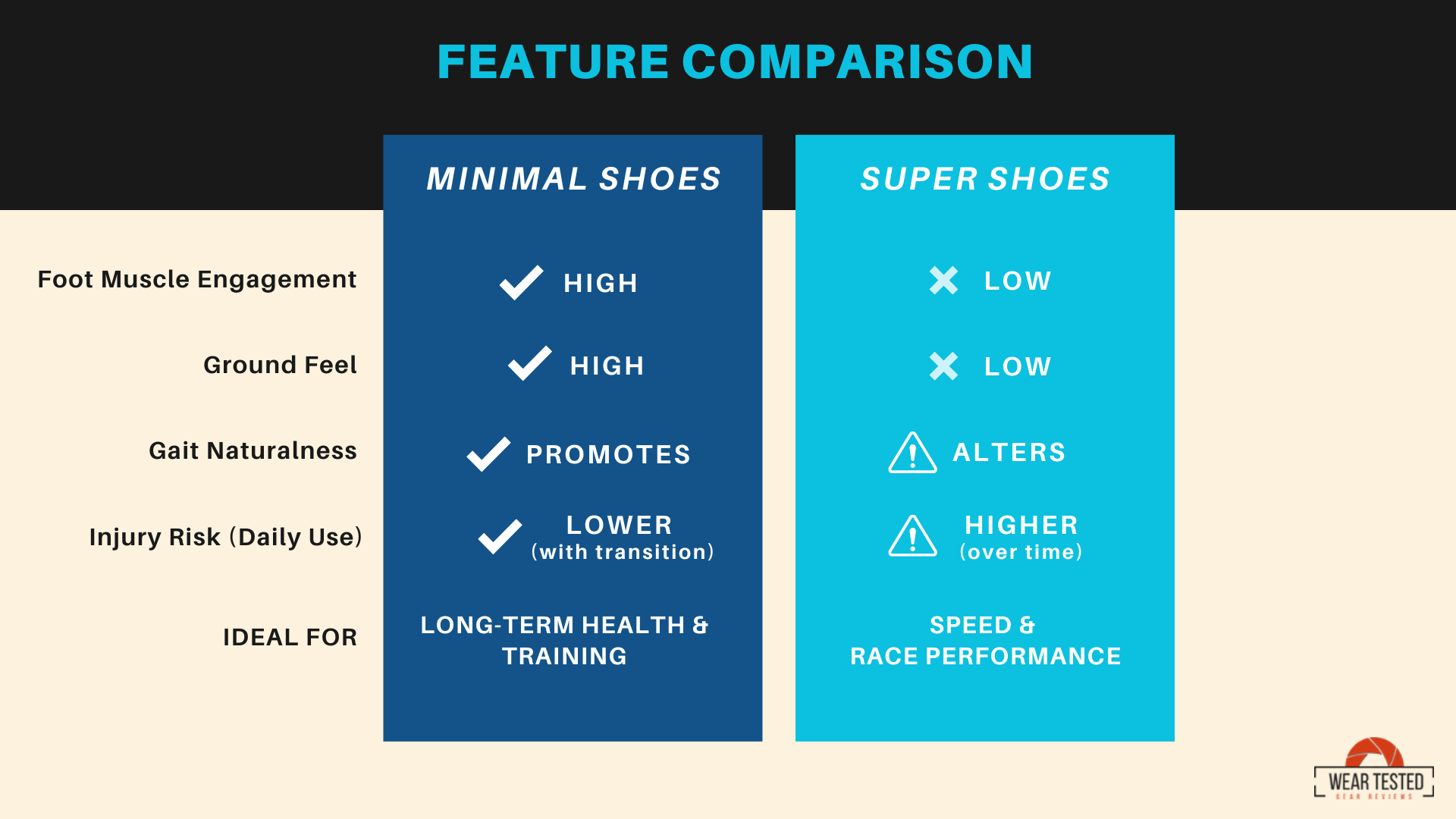
Super shoes help speed, but may weaken your feet
Transition gradually to avoid injury
For daily wear and training, minimal wins for long-term health
The Human Foot Wasn’t Built for Cushioned Prisons
Modern sneakers are like padded cages. They restrict movement, dull sensations, and weaken the muscles in your feet. Over time, this can lead to common foot issues like bunions, flat feet, and even knee problems. [2]
Minimal footwear—light, flexible shoes with no heel lift or arch support—are designed to work with your foot, not against it. Research shows they can:
Strengthen foot muscles
Improve balance and coordination
Encourage natural gait mechanics
Reduce knee strain
Even help manage joint issues like knee osteoarthritis
That’s not just theory—it’s backed by studies on everyone from young runners to older adults. [2]
The Problem with Carbon-Plated Super Shoes
Those flashy carbon-plated shoes promise speed—and they deliver it. But there’s a trade-off.
The thick foam and rigid plates alter how your foot moves. Here’s what happens:
Less foot muscle activation → weaker feet over time
Stiff plates → reduced natural ankle movement
Dulled sensations → poorer balance and body awareness
Documented bone stress injuries in elite runners
Basically, they may help you run faster today… but weaken the foundation of your movement tomorrow. [1-5]
Minimal Shoes = More Feedback, More Strength
With minimal shoes, your feet can feel the ground. This “proprioception” is crucial for:
Reacting quickly to uneven surfaces
Improving stride efficiency
Strengthening small muscles you forgot you had
By training in minimal shoes (or barefoot), your body adapts. Your tendons get stiffer (in a good way), your balance improves, and your foot becomes more resilient. [1-3][5-8]
“Minimal footwear should be the default for healthy aging. Super shoes are tools—use them wisely.”
But Wait—Don’t Go Cold Turkey
If you’ve been wearing supportive shoes your whole life, jumping straight into barefoot-style running can cause injuries. We’re talking about Achilles pain, stress fractures, or tendon strain.
The key is a slow, smart transition. Let your body adapt:
Start by walking in minimal shoes
Mix them into short runs
Gradually increase time and intensity
Allow recovery and monitor soreness
This applies both ways—switching to or from carbon shoes both require care. [1-12]
While carbon-plated super shoes have a place in race-day performance, they shouldn’t be your everyday choice. The evidence favors minimal footwear for:
Building foot strength
Preserving joint health
Promoting natural movement
Supporting lifelong mobility
Experts recommend using minimal shoes as your default, especially if you want your feet and legs to stay strong as you age. Save the super shoes for the rare occasion when you need every second to count. [1-13]
Davis IS, Hollander K, Lieberman DE, Ridge ST, Sacco ICN, Wearing SC.. Exerc Sport Sci Rev. 2021 Oct 1;49(4):228-243. doi: 10.1249/JES.0000000000000263. PMID: 34091498.