
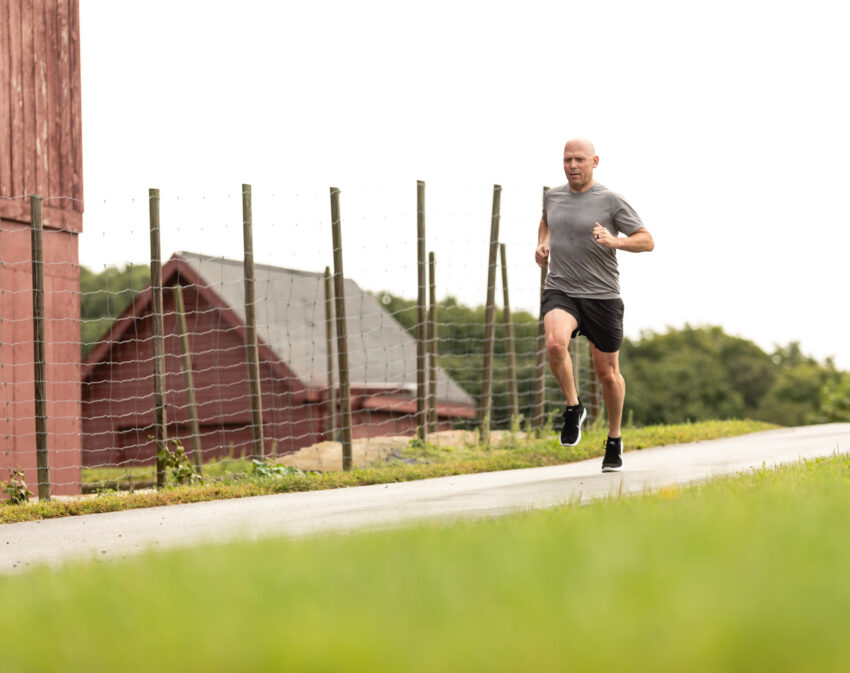
In a world that often celebrates results more than resilience, the story of my good friend Rick Muhr is a powerful reminder of what it truly means to come back from the unthinkable. Rick’s life as a lifelong runner, coach, and mentor was shattered in an instant by a near-fatal crash, yet his response to trauma, pain, and uncertainty has become a masterclass in courage, gratitude, and service. His journey—from fast runner, to leading thousands of runners, to learning to walk again after devastating injuries—holds lessons for anyone facing injury, aging, or a personal crisis. In this blog, I want to share why Rick’s story matters so deeply to me, and why his example of quiet strength, faith in others, and relentless hope can change not just how we run, but how we live. This blog is my tribute to Rick: a celebration of his unwavering spirit, his generosity, and the way his journey invites all of us to show up more fully for the people we care about.
Background
How would you introduce yourself today to someone who has never heard of you—as an athlete, coach, and person?
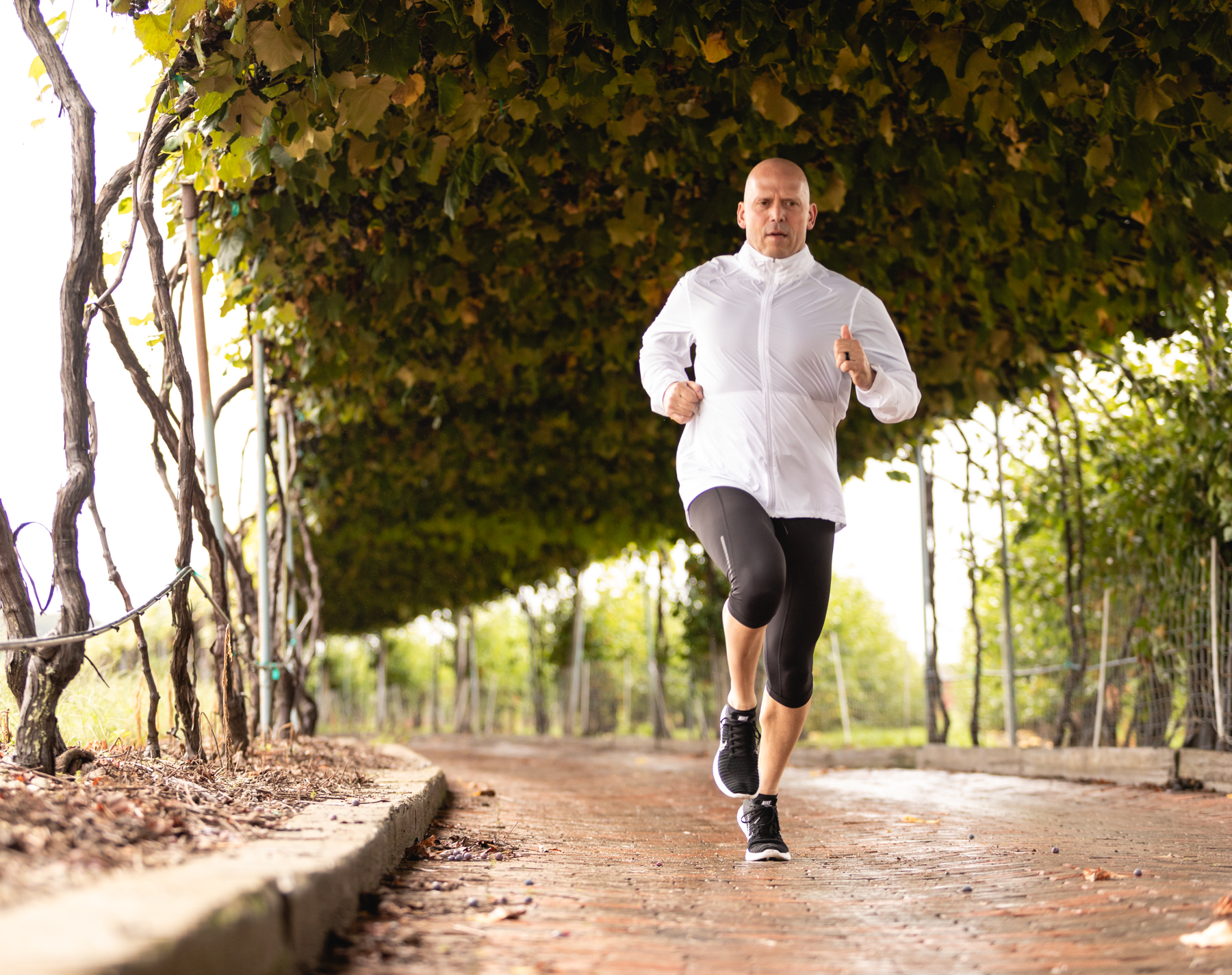
I’ve been a consistent runner for more than 50 years. From the moment I started, I embraced the challenge and the deep sense of accomplishment that running provides.
Over the past 30 years, I’ve had the privilege of coaching thousands of runners, which has been one of the greatest blessings of my life. I’ve had a front-row seat to the power, courage, and beauty of the human spirit as people push themselves beyond what they once believed possible.
Running and coaching have truly shaped who I am. They’ve taught me the value of perseverance and the profound impact of serving others and helping them realize their best selves.
When you look back over your life in running, what are the key chapters that shaped who you are now?
The first defining chapter was completing my first marathon after having only run seven miles in training—and somehow qualifying for the Boston Marathon. That experience planted the seed of a belief that has stayed with me ever since: that we are capable of far more than we think.
Another chapter was the consistency I found early in my career, running under three hours in each of my first 26 marathons. That period taught me the value of discipline, patience, and respect for the process.
Achieving a personal best of 2:33 in the marathon—something I was fortunate to do three times—helped me understand that I had likely reached my full potential as a competitive runner.
More than anything, running has taught me how to pursue meaningful goals. The lessons from the roads and racecourses have carried into every aspect of my life.
What first drew you into coaching, and when did you realize it was more than just a side passion?
I was unexpectedly drawn into coaching in 1996 after my mother was diagnosed with leukemia. I traveled to the Mayo Clinic to visit her, and during our final conversation, I made a promise to her—that I would do something meaningful with my life. At the time, I didn’t know exactly what that meant, but I felt it deeply in my heart. She passed away shortly thereafter.
As I began the grieving process, I decided to run the Ocean State Marathon a few months later. While standing in the starting corral before the race, I noticed signs for Team in Training with the Leukemia & Lymphoma Society. In that moment, it felt as though my mother was speaking to me—guiding me toward a way to fulfill that promise.
I reached out to the organization and eventually ran the Boston Marathon to raise funds to support their mission. During the weekly training runs, I developed strong and meaningful relationships with my teammates, and I realized how powerful running could be in bringing people together around a purpose.
Within a few months, the Massachusetts chapter of the Leukemia Society of America offered me the head coaching position. I accepted and realized almost immediately that coaching was not just a side passion—it was a calling.
How has coaching thousands of runners over the years changed your own relationship with the sport?
Thirty years of coaching has strengthened my relationship with the sport in ways I never could have imagined. It has taught me that every runner brings different abilities, goals, and aspirations to the starting line.
Working with thousands of runners has helped me realize that running is about far more than the quantitative side of the sport. True fulfillment often comes when people find peace with themselves and their place in the world.
Running has a remarkable way of creating space for introspection and personal discovery. As a coach, having a front-row seat to those moments is something I never take for granted.
The Accident Story
Can you walk us through the day of your accident—what you remember before, during, and immediately after the impact?
The day of my accident was October 2, 2021—a beautiful fall day in New England. I was out on a 100-mile training ride with my wife and three others when a car struck me head-on.
In the moments before the impact, time seemed to slow down. I remember having several very distinct thoughts. First, I thought about my wife and my children. Then I remember thinking, this is really going to hurt. And finally, the realization came that this might actually kill me.
The next moment was an incredible explosion of noise and force as I was struck and thrown onto the hood, windshield, and roof of the car.
What were your first thoughts when you realized the severity of your injuries and what you might lose?
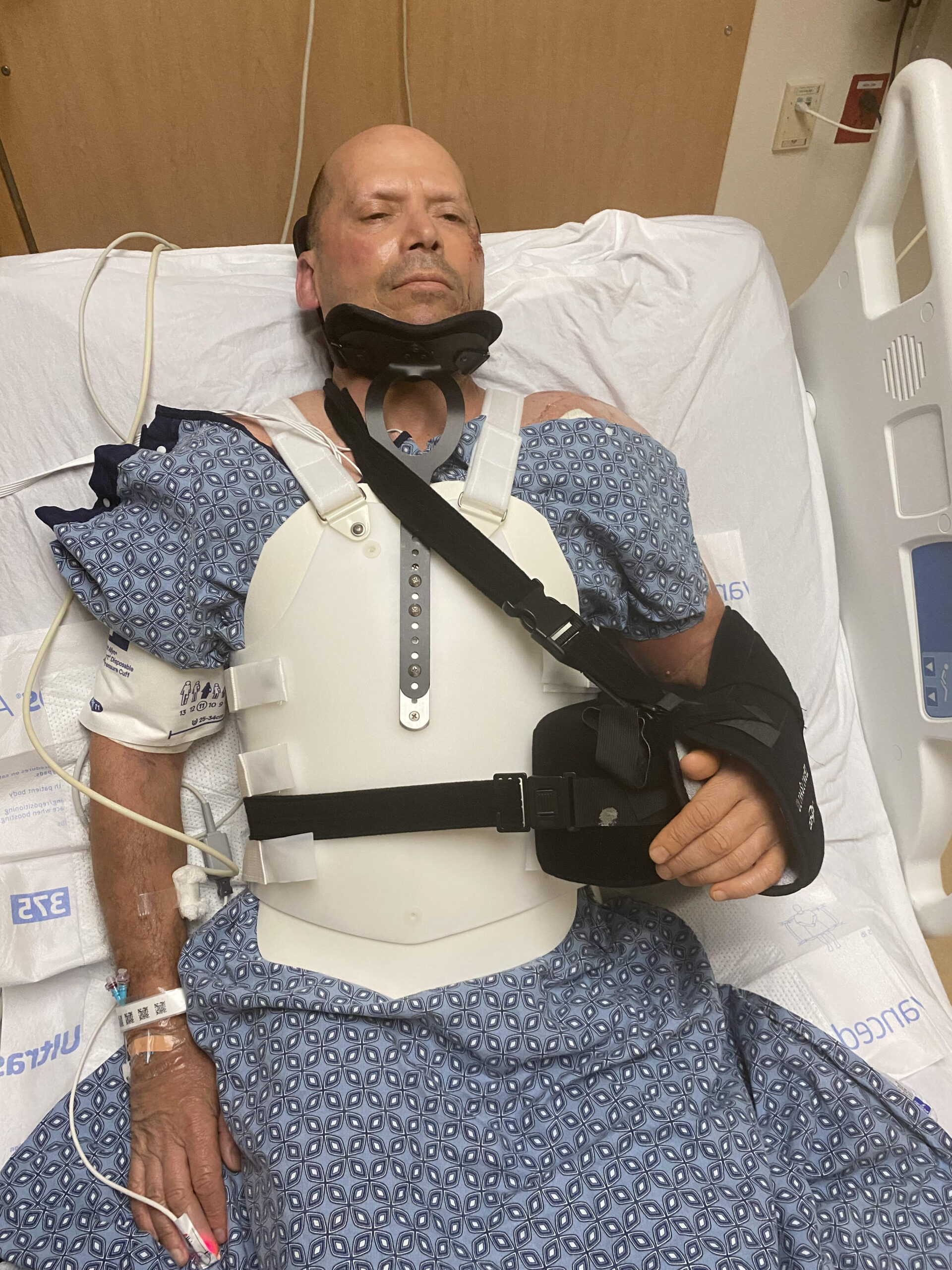
My first thought was simply how grateful I was to be alive, despite the excruciating pain I was in. I had sustained a concussion, a broken clavicle, ten broken ribs, a collapsed lung, four compression fractures, a dislocated shoulder, and a shattered humerus.
Even in those early moments, I remember thinking that I was going to come back from this. My goal was to reclaim the level of health, wellness, and fitness that had just been taken from me.
Were there any specific words from doctors, family, or friends that really stuck with you in those first days?
I was truly blessed to receive the very best medical care. The trauma and orthopedic teams—along with the doctors, nurse practitioners, nurses, and personal care assistants—provided the reassurance, encouragement, and expert care that became the foundation of my recovery.
At the same time, the support from my family, friends, and the running community fueled my determination to heal and return to the life I loved.
That experience reinforced something I’ve long believed: nothing significant is ever accomplished alone. My recovery was the result of the collective strength, compassion, and support of so many people around me.
At your lowest point in the hospital, what did a “future Rick” look like in your mind—if you allowed yourself to imagine him at all?
I was fortunate to maintain a remarkable degree of positivity throughout my time in the hospital, so I didn’t experience many truly low moments. But when I imagined a “future Rick,” I saw someone with an even deeper sense of gratitude for everything life has to offer.
I wanted to come out of that experience more compassionate and more committed to serving others whenever the opportunity presented itself. Of course, I also imagined being healthy again.
More than anything, I wanted to make sure the most important people in my life truly knew how much they meant to me—and how deeply I loved them.
Recovery, mindset, and natural running
What were the most critical medical or rehab milestones that made you think, “I’m really coming back” rather than just surviving?
Being able to walk for the first time after nearly a month of not moving at all was the moment that made me believe I could truly come back from this.
I didn’t walk far, and it was harder than any marathon I had ever run. But that small step brought an overwhelming sense of accomplishment and hope. In that moment, I knew I was no longer just surviving—I was beginning the long journey of coming back.
How did principles of efficient or natural running—posture, relaxation, economy—show up in your rehab work, even when you were just learning to move again?
I was very mindful of my movement throughout the rehab process. The principles that guide efficient running—good posture, relaxation, and economy of movement—became important even when I was simply learning how to move again.
Because of my injuries, my normal movement patterns had been completely disrupted. I had to rebuild my balance, stability, and strength step by step.
It was the most difficult physical challenge I have ever faced, but those same principles that guide good running also helped guide my recovery.
Can you describe one specific rehab session or breakthrough that you still replay in your mind when a run gets hard?
After I was transferred from UMass Medical Center in Worcester to Spaulding Rehabilitation Hospital in Boston, I began working closely with physical and occupational therapists. I remember one session where they set up orange cones in a hallway and had me weave in and out of them while they timed me.
I was very lightheaded during the exercise, but it also excited me. It was an opportunity to gauge and test my progress.
When I finished, they told me that no one had ever completed the course as fast as I did. I felt incredibly proud in that moment—but I also knew that the real work of recovery was still ahead of me.
What role did fear play—fear of re-injury, of not being “your old self”—and how did you work with that mentally?
I never once felt fear—fear of re-injury or of not being “my old self.” What I felt instead was empowerment and determination. I was confident that, with the time and effort, I could make a full recovery.
Even now, more than four years later, I’m still putting in the work to continue improving my health, wellness, and fitness. That commitment has become a way of life, not just a goal.
Coaching 100s of runners
You now coach hundreds of runners preparing for marathons around the world; what does your coaching week actually look like in practice?
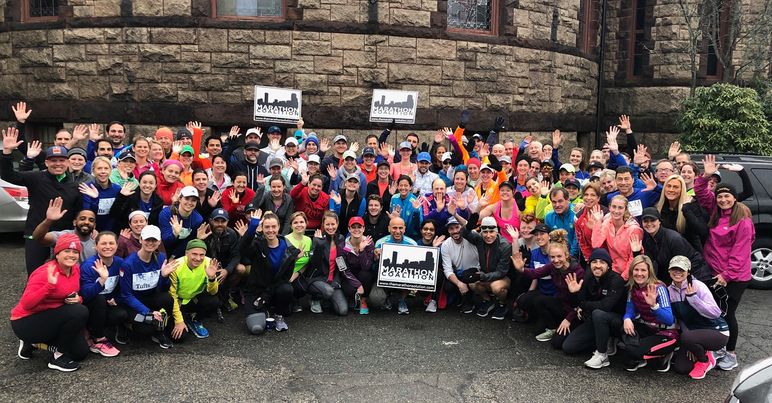
Each week, I lead an in-person training session that often includes over 100 runners. I also host weekly Zoom calls to keep everyone motivated, engaged, and connected.
The rest of my week is spent answering hundreds of detailed emails—a process that can consume nearly 30 hours—while also training myself to stay at my best and serve as a role model for my runners. I dedicate additional time to staying current on the latest research and training trends, ensuring that my coaching is grounded in both experience and evidence.
Has surviving a near-fatal crash changed how you talk to your athletes about pacing, goals, and expectations?
Absolutely. Surviving my accident has deepened my awareness of the balance between empowerment and setting realistic goals. I know many runners tend to stay within their comfort zones, so I aim to gently push them just beyond the limits they set for themselves.
My coaching is rooted in empowerment, and it’s incredibly meaningful when runners tell me how inspired they are—not just by their own progress, but by how I’ve faced and overcome the challenges of my accident and subsequent cancer diagnosis.
What themes or mantras do you find yourself repeating most often to your runners in the buildup to a big race?
Runners naturally compare themselves to others, especially with all the tracking platforms available today. I try to remind them that comparison is the thief of joy. Instead, I encourage them to focus on their own fitness and the supporting activities that truly improve performance—nutrition, hydration, sleep, stress management, strength training, dynamic warm-ups, and post-workout recovery.
I also stress the importance of pacing, especially in the first 2–3 miles of a training run or race, since those early miles often set the tone for the rest of the effort. While it’s challenging to keep them from obsessing over metrics like average pace, heart rate, and cadence, I keep guiding them to focus on the bigger picture: running smart, staying consistent, and enjoying the process.
How do you help someone whose primary identity is “runner” navigate injury, setbacks, or aging in a healthy way?
I encourage runners of all ages to treat their bodies like a luxury car, not a rental. Naturally, runners love to run, and often that passion comes at the expense of what keeps them healthy. In many ways, the best students of my coaching methodology are injured runners—until they face an injury, they often feel bulletproof.
Managing a runner’s mindset, expectations, and injuries takes as much care as the training itself. When someone gets hurt, I typically refer them to a medical professional to determine the root cause and establish a recovery protocol. At the same time, I keep them moving through low-impact activities—walking, stationary cycling, or running in the water—to maintain engagement and ease the fear of losing fitness.
Regarding aging, at 68, I can share my own experience of accepting slower times and taking the necessary precautions to stay healthy and maintain functional movement. I help runners shift their focus from the purely quantitative side of running to the more qualitative aspects of life—enjoying the process, staying resilient, and finding joy in their journey.
Aging, Performance, And Perspective
You’re still capable of running a Boston-qualifying time at 65 plus—what does your training look like now compared with your younger racing years?
My training volume is much lower than it was in my younger years, but I focus on aspects I often neglected then. I rarely run on consecutive days; instead, each running day is followed by an active recovery day. That can include time on the stationary bike, rucking with a 20-pound weighted vest, rowing on the Concept2, running in the water, snowshoeing or Nordic skiing in the winter, and cycling when the temperature is above 60 degrees.
I’m also very structured with my pre-run dynamic warm-up, disciplined with my pacing in the opening miles, and follow a Run-Walk-Run approach—six minutes running, a brisk 30-second walk break—paired with thorough post-workout recovery. Nutrition, hydration, sleep, and stress management are equally important and remain central to my routine.
What are the non-negotiables in your current routine—strength, mobility, sleep, nutrition—that keep you durable?
I monitor my resting heart rate each morning to gauge how well-rested or stressed I am. My baseline is 38 bpm, so if it’s 3 beats higher, I reduce the volume and intensity of my run, substitute cross-training, or take an extra rest day. From there, I prioritize proper nutrition, hydration, sleep, and stress management.
I also focus on functional movement to improve balance, stability, and fluidity, and I include two strength-training sessions each week. One of my favorite exercises is walking in different movement patterns with a resistance band around my ankles—this engages and strengthens the muscles I rely on for balance, stability, and propulsion.
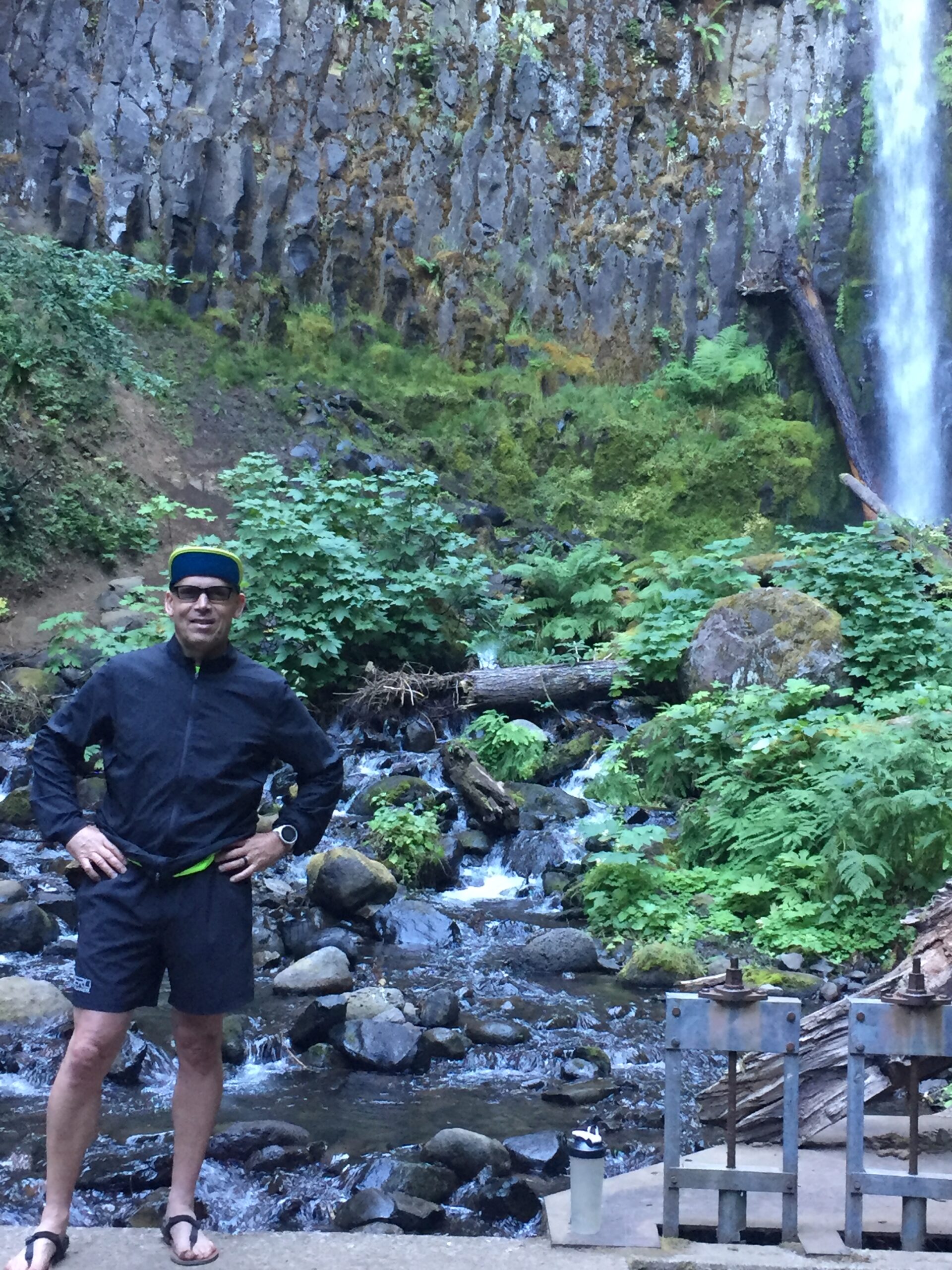
How has your definition of “success” in running evolved from being a 2:33 marathoner to the coach and survivor you are today?
Today, my definition of success isn’t measured by time on a clock, but by effort—both my own and that of the runners I coach. It’s about improving mindset and embracing the qualitative aspects of running and life.
I also define success as maintaining a positive perspective on everything—the highs and lows, the challenges and setbacks, disappointments, failures, and victories alike.
If you could speak to runners in their 20s and 30s about longevity, what would you most want them to understand now?
I would encourage runners in their 20s and 30s to adopt a long-term view of their fitness and their lives. The habits they build around health, wellness, and fitness during these years will either pay dividends or come at a high cost later.
In my experience, the areas where runners most often struggle are nutrition, hydration, sleep, and stress management—closely followed by neglecting pre-run dynamic warm-ups and post-workout recovery. I also stress the importance of running easy on days following a hard workout or when their heart rate is elevated, as recovery is just as crucial as effort.
Meaning, Community, And Take-Home For Readers
You’ve been described as a motivator and humanitarian as much as a coach; what does service look like to you in the context of running communities?
My service to the running community is simple: I treat every person equally and meet them where they are. I offer guidance tailored to their current fitness level and goals, ensuring those goals are realistic.
Beyond training, I encourage runners to approach life with gratitude and determination. Life is precious and fragile—it can be taken in an instant—so I remind them to live in the moment, stay positive, and appreciate everything life offers. My hope is that my contributions to the running community extend far beyond the sport itself.
How did your running and coaching community show up for you after the crash, and how did that support shape your recovery?
I was hit the week before the October Boston Marathon—the first time in history the race was not held in April. One of my runners, David Brown, created “Rick on a Stick” signs featuring my picture (not the most flattering photo) and distributed them along the Boston Marathon course. People holding the signs shared stories of runners I coached who stopped, knelt, and even cried when they saw them. David also visited me in the hospital after I recovered from several surgeries. His thoughtfulness, along with the support of so many others, kept my spirits high and provided comfort and encouragement throughout the ordeal.
In addition, the President and CEO of Dream Big organized a GoFundMe on my behalf that raised over $30,000. I simply could never have recovered so quickly or fully without the love and support of the running community.
What do you hope runners take away from your story when they watch the UMass Memorial video or read this interview?
I hope runners take away that everyone has the ability to dig deep and find the courage, strength, and determination to face—and overcome—almost any challenge. The world is full of incredible, compassionate people who are ready to support those in need. And perhaps most importantly, the comeback is always more compelling than the setback.
If a runner is reading this while coming back from their own injury or personal crisis, what is one specific, practical step you’d invite them to take this week?
My advice is to avoid being overwhelmed by the challenge’s magnitude. Stay present, focus on the positive aspects of the situation, and resist falling into despair. Both the body and mind are incredibly resilient—leverage your strengths and take one intentional step each day to move forward. Recovery isn’t always a linear proposition. It’s filled with ups and downs. Try to take the peaks and valleys away, and turn them into rolling hills by being positive and determined throughout your recovery and comeback.
If you had to summarize your philosophy in one sentence that could sit under your name on the Natural Running Center, what would it be?
Running is more than a sport—it’s a path to growth, resilience, and helping others realize their best selves.
Is there a particular quote, song lyric, or line from a book that has guided you through this chapter of your life?
“The ultimate measure of a man is not where he stands in moments of comfort and convenience, but where he stands at times of challenge and controversy.”
― Martin Luther King Jr.
What’s the next challenge or project that excites you most—either personally, for your athletes, or for the larger running community?
The next challenge that excites me most is passing the values of my generation on to the next—helping them shift their focus from technology to genuine, one-on-one connections, and to approach every person they meet with kindness and authenticity.
……………………………………..
Rick’s story is not just about surviving a horrific crash; it is about choosing, day after day, to live fully in the body he fought so hard to reclaim. His athletes see it in the quiet way he shows up at training runs, the thoughtful emails before big races, and the unwavering belief that every runner carries untapped strength. For those of us who lace up our shoes in search of health, community, or redemption, Rick offers a living reminder that movement is a gift we should never take for granted. May his journey inspire you to honor your own, to run with gratitude, and to carry his example the next time the road ahead feels impossibly long.
Thank you Rick!!!!!
To contact Rick you can reach him at
Rick Muhr
rickmbmw@gmail.com
Boston Marathon Running CoachFounder-The Marathon Coalition